
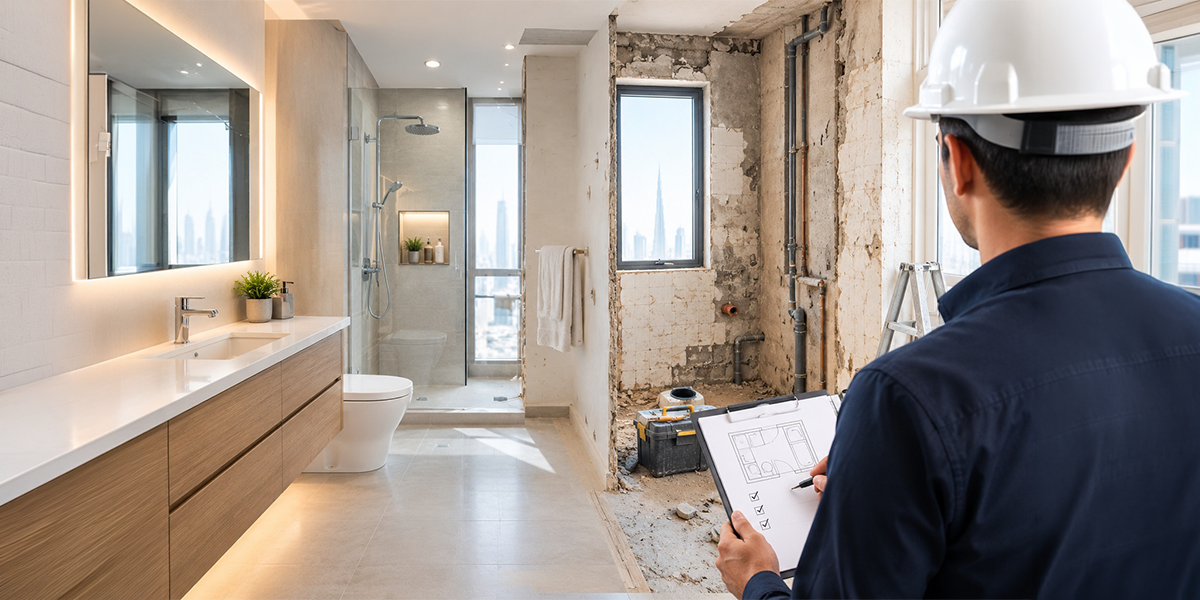
Bathroom Remodeling Dubai involves more than removing old tiles and replacing visible fixtures. Before an existing bathroom is dismantled, it is important to understand the condition of the walls, floors, plumbing, drainage and other concealed elements. Early checks can reveal problems that may otherwise become apparent only after demolition has started. Taking time to assess the existing space can make the renovation more organised and reduce unnecessary disruption.
Inspect the Existing Bathroom Before Demolition
An existing bathroom should be assessed before tiles, fittings or other finishes are removed. The condition of the walls, floor, ceiling and visible pipework can provide useful information about what may need attention during the renovation. Cracks, damp patches, loose tiles and damaged grout should be noted before work begins.
The inspection should also include areas that are not immediately visible. Access panels, service points and connections around sanitary fittings may provide useful clues about the condition of the systems behind the finished surfaces. Recording these details before demolition creates a clearer starting point for the work.
Some initial checks can include:
- Looking for visible cracks, stains or signs of moisture
- Checking whether existing tiles or fittings are loose or damaged
- Inspecting accessible pipe connections and drainage points
- Identifying areas that may require repair before new finishes are installed
These checks do not mean that every existing component needs to be replaced. They help determine what can remain, what requires repair and what should be removed.
Check Plumbing and Drainage Conditions
Plumbing is one of the most important areas to examine before an existing bathroom is dismantled. Pipes may be hidden behind walls or beneath floors, making problems difficult to identify once the renovation has been completed. Checking accessible connections and looking for signs of leaks can help identify potential issues at an early stage.
Drainage should also be reviewed before the design of the layout is completed. Slow drainage, blocked drains, or standing water can suggest issues that need to be taken care of prior to installing new surfaces. Drainage locations should also be taken into consideration if there are going to be any changes in fixture location.
Renovation can become an avenue for dealing with any old plumbing, rather than masking it with fresh finishes. Addressing such problems prior to the actual installation process may decrease the chances of disrupting newly finished work.
Look Beneath Existing Tiles and Finishes
Stripping away old tiles can allow one to know about the state of the base layer underneath them. Issues such as irregular base layer, damaged plaster, cracks, or deterioration must be sorted out in order to correctly tile the floor. Laying new tiles on such surfaces without fixing will definitely cause trouble.
The state of the floor is just as crucial. Any uneven spots will affect drainage and make it harder to get an even finish. It’s also a good idea to check the walls for their stability and suitability before applying any new finishes.
Property owners considering bathroom renovation ideas should therefore look beyond colours and finishes. Practical improvements may include correcting uneven surfaces, improving drainage or replacing damaged sections that could affect the new installation.
Assess Existing Waterproofing
Waterproofing deserves particular attention when an existing bathroom is completely stripped. It may not be easy to determine whether there is a problem with older waterproofing systems since they are covered up by tiles and other layers. The moisture-prone areas will be easier to examine once the finishes are stripped off.
Signs of deterioration or past moisture issues need to be looked for in the shower area, bathroom floor, corners, and pipe penetrations. This needs to be done before any new finishes are put on.
Professional bathroom waterproofing services will be needed in case the existing waterproofing layer is either faulty or being replaced during the remodeling process. Proper waterproofing at the right time is essential in order to safeguard the surfaces below the bathroom floor coverings.
Bathroom Remodeling Dubai: Decide What Should Stay and What Should Go
It is not necessary to demolish everything that exists in the old bathroom. Some fittings and plumbing systems or structures can still be used while some have to be replaced due to various reasons such as age or modification of the design.
Such decisions made prior to demolition will assist in regulating the extent of work involved. It may also avoid unnecessary removal of useful parts. The renovation process should define the parts that will be retained, restored, relocated, or replaced.
A practical assessment can consider:
- Fixtures that remain functional and suitable for the updated bathroom
- Plumbing that can be retained without affecting the renovation
- Surfaces that require repair rather than complete replacement
- Elements that need removal because of deterioration or layout changes
This approach makes demolition more purposeful and helps keep the renovation focused on necessary improvements.
Prepare for the New Tile Installation
After the removal of the current bathroom, the exposed walls and floors must be prepared before installing the new surfaces. Any unsuitable parts must be sorted out in order to ensure that there is a solid base for the new surfaces.
The preparation stage is especially significant in the bathroom tile installation process. Tiles require a proper substrate to ensure uniformity in their finish. Poor preparation may lead to improper placement of tiles and uneven finish.
As such, this will ensure that the process will respond to the true nature of the substrate in itself and not just hide whatever was there before. Taking your time to prepare the substrate could yield some better results.
Consider How the Renovation Will Be Carried Out
There are various processes involved in bathroom remodeling, and their sequence will determine the outcome. Demolition, repair, plumbing, waterproofing, surfacing, and finishing have to be planned as a coherent process and not as separate actions.
Each step in the bathroom renovation process requires adequate time to be done correctly prior to the start of the next phase. The quick movement from demolition to the finishing phase may cause issues when there is still work to be done.
A clear sequence can help manage:
- Removal of existing materials
- Plumbing and drainage adjustments
- Surface repairs and preparation
- Waterproofing and finishing work
Good coordination also makes it easier to identify unexpected conditions once the existing bathroom has been opened up.
Work With the Existing Building Conditions
There are certain characteristics of each and every bathroom that exist, and there may be restrictions and limitations as well. The positions of pipes, drainage system, wall structure, and space available may affect the alterations that are possible. In this respect, the renovation project must adapt to the existing building.
A professional assessment will help in identifying any area that requires additional preparation prior to conducting the renovations. Through an assessment, one will get to know whether or not the existing components are worth using or they should be replaced.
The objective is not necessarily to make the bathroom completely different. Instead, the work should address the issues that affect functionality, durability and the intended outcome.
Allow for Unexpected Findings
It might just be that opening up the bathroom leads to some problems that were previously unnoticed. Issues related to piping systems and leaking may become evident when finishes have been stripped away.
Flexibility in the renovation process will be very helpful in making it much easier without compromising the whole process. What is more, it is necessary to make a distinction between the repairs that must be done and the ones that should not.
With properties being renovated with bathroom renovation services in Dubai, such preparation will lead to a more realistic approach for this task. A renovation plan which anticipates possible hidden issues will be less reliant on the assumption of what lies underneath.
Complete Checks Before the New Bathroom Takes Shape
The final inspection before installation should confirm that the areas being covered are ready for the next stage. Plumbing connections, drainage, surfaces and waterproofing should be checked before tiles, fixtures and other finishes make access more difficult.
Selecting experienced bathroom remodeling contractors may ensure that after demolition there will be proper preparation rather than starting the actual work. Every step must have some contribution towards the end result of the bathroom.
Such an assessment will ensure that the renovation process has a better foundation to begin with. This is because the owner will be aware of what is there before taking it down.
Conclusion
Successful renovation starts even before you embark on demolishing your bathroom. Checking such factors as wall surface and condition, plumbing, drainage, water proofing, and all the hidden spaces in the bathroom helps one detect faults and thus gives one more insight regarding what needs to be done. Consequently, the whole process will be more orderly and systematic. With thorough preparations made, the foundation for the new bathroom will be well set up.
FitOut UAE offers comprehensive bathroom remodeling services, from initial assessment and demolition planning to surface preparation, waterproofing, tiling, and final finishing.
Frequently Asked Questions
What should be checked before starting bathroom remodeling?
Wall conditions, floor conditions, plumbing systems, drainage system, exposed piping, finishes, and moisture sensitive locations should be evaluated prior to any demolition process. This ensures that any necessary repair work can be determined and what materials can be kept.
Is it necessary to replace everything during a bathroom renovation?
No. Plumbing routes and other parts could be used depending on how well their current conditions will fit in with the new construction. However, replacement must be based on condition and functionality of the new bathroom renovation.
Why is checking the substrate important before installing new tiles?
The substrate serves as the base for the new finish. The condition of cracks, rough surface, and any damages on the surface may influence the installation process; thus, these problems must be solved beforehand.